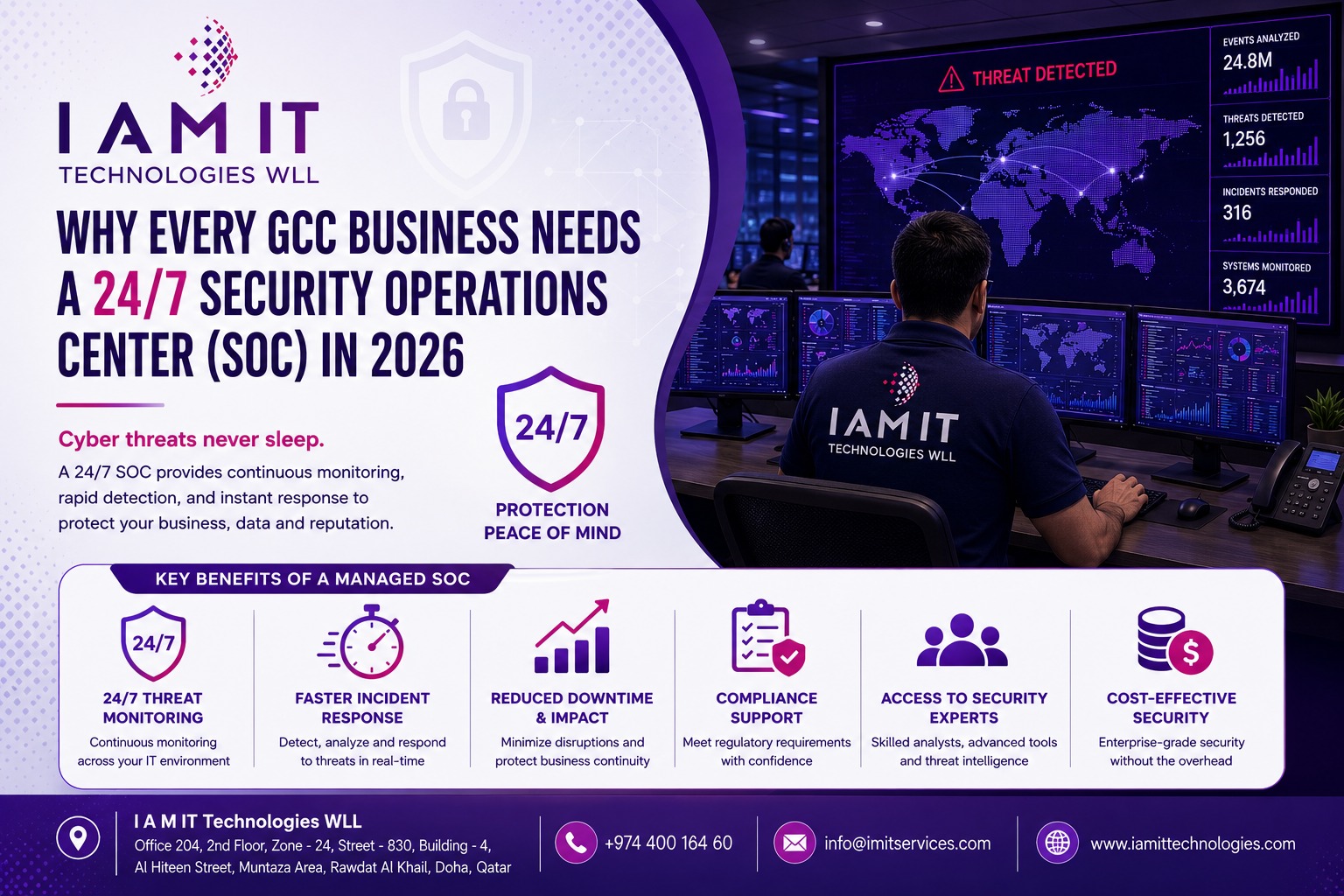
Why Every GCC Business Needs a 24/7 Security Operations Center (SOC) in 2026
Introduction
Cybersecurity is no longer just an IT concern, it is a business priority. Organizations across the GCC are increasingly becoming targets of ransomware, phishing, insider threats, and sophisticated cyberattacks. As businesses embrace cloud computing, hybrid work, and digital transformation, the attack surface continues to grow.
Many organizations rely on traditional security tools such as firewalls and antivirus software. While these solutions remain essential, they are no longer sufficient on their own. Modern cyber threats require continuous monitoring, rapid incident response, and expert analysis.
This is where a 24/7 Security Operations Center (SOC) becomes invaluable.
What is a Security Operations Center?
A Security Operations Center (SOC) is a centralized team of cybersecurity professionals responsible for continuously monitoring, detecting, investigating, and responding to security threats.
A modern SOC combines advanced security technologies with experienced analysts to provide organizations with around-the-clock protection.
Key SOC functions include:
- Continuous network monitoring
- Threat detection
- Incident response
- Security event analysis
- Vulnerability management
- Threat intelligence
- Compliance reporting
Why Cyber Threats Are Increasing
Today's cybercriminals use automated tools, artificial intelligence, and ransomware-as-a-service platforms to attack organizations of all sizes.
Common threats include:
- Ransomware attacks
- Business Email Compromise (BEC)
- Insider threats
- Cloud misconfigurations
- Credential theft
- Zero-day vulnerabilities
- Supply chain attacks
Even small businesses are no longer overlooked.
Benefits of a Managed SOC
1. 24/7 Threat Monitoring
Cyberattacks don't follow business hours. A managed SOC continuously monitors your infrastructure, identifying suspicious activity before it causes damage.
2. Faster Incident Response
The speed of response directly impacts business loss. SOC analysts investigate alerts immediately and help contain threats before they spread across the organization.
3. Reduced Downtime
Quick detection minimizes operational disruption, helping businesses maintain productivity and customer confidence.
4. Compliance Support
Many organizations must comply with standards such as ISO 27001, SOC 2, PCI DSS, GDPR, and local regulatory requirements. A SOC provides audit logs, monitoring reports, and evidence that support compliance initiatives.
5. Access to Security Experts
Hiring an in-house SOC team requires significant investment in skilled professionals and specialized tools. A managed SOC gives organizations access to experienced cybersecurity experts without the associated recruitment and infrastructure costs.
Why Many Businesses Choose Managed SOC Services
Building an internal SOC requires Security analysts, a SIEM platform, Threat intelligence feeds, Endpoint Detection & Response (EDR), 24×7 staffing, and Incident response capabilities.
For many organizations, outsourcing these services is more cost-effective while maintaining enterprise-grade security.
How IAMIT Helps
IAMIT provides end-to-end Managed SOC services tailored to organizations across the GCC and India.
Our services include:
- 24/7 Security Monitoring
- SIEM Management
- Endpoint Detection & Response
- Incident Investigation
- Threat Hunting
- Vulnerability Management
- Security Reporting
- Compliance Support
Our team works proactively to identify threats before they become business disruptions.
Final Thoughts
Cybersecurity is not about reacting to attacks—it is about preventing them. A managed Security Operations Center provides continuous visibility, rapid response, and expert protection that modern businesses require.
As cyber threats continue to evolve, organizations must move beyond traditional security and adopt proactive security operations.
Ready to strengthen your cybersecurity posture? Contact IAMIT today to learn how our Managed SOC services can help protect your business around the clock.